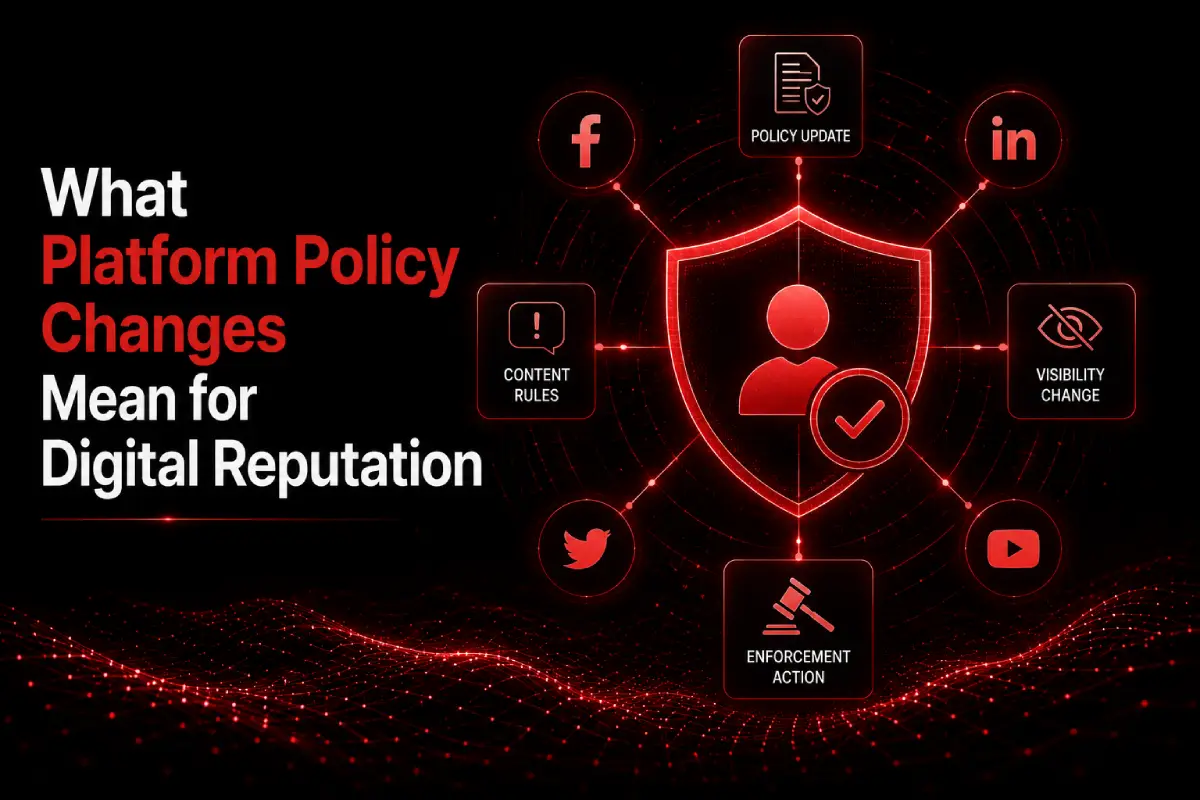
Platform rules shape reputation more than most people realize.
A change in review moderation, a shift in how search surfaces content, a new policy on identity verification, or an update to platform enforcement can alter visibility, trust and discoverability overnight. These changes often look like technical or operational updates. In reality, they are Digital Reputation events.
Digital Reputation is not built in a vacuum. It is shaped inside digital environments that are controlled by platforms, search systems and public infrastructure.
Professionals, founders, institutions and brands all build visibility in spaces they do not fully own. Search engines, review platforms, social networks, video platforms and professional networks all influence what is seen, how it is ranked and how trust signals are interpreted. When those rules change, reputation conditions change too.
At Ennovaterz, Digital Reputation is explained through visibility, credibility, authority and trust. Platform policy changes can affect all four:
- Visibility: changes in distribution, search display or profile treatment affect who sees you and how often.
- Credibility: review systems, verification processes and moderation rules influence whether a profile, institution or business appears serious and legitimate.
- Authority: if thought leadership, interviews, articles or public contributions are harder to surface, authority can weaken even when expertise remains the same.
- Trust: reviews, consistency, verification signals and platform confidence cues can be reshaped by policy changes.
Final thought:
Digital Reputation is not only a function of effort. It is also a function of digital infrastructure. Platform policy changes are one of the clearest reminders that visibility, credibility, authority and trust are shaped not only by what you publish, but by where and how it is being interpreted.