The phrase “online reputation” has been around for years. It has usually referred to what appears about a person or organization on the internet — reviews, search results, social mentions, articles, comments or public sentiment. That lens still matters. But it is no longer enough.
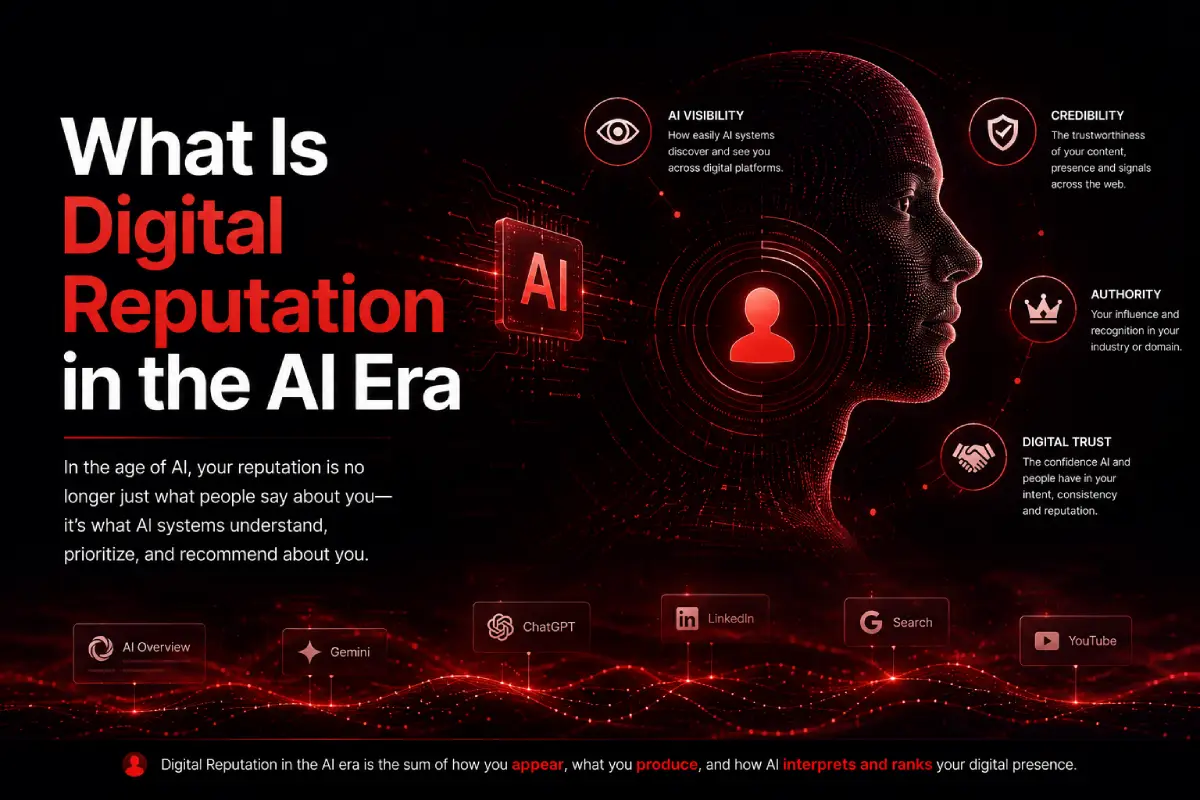
Digital Reputation is emerging as a broader and more useful way to understand how people, professionals, leaders and institutions are perceived in the digital world. It is not just a new label for the same idea. It reflects a meaningful shift in how visibility, credibility, authority and trust are created and interpreted in the AI era.
What online reputation usually focuses on
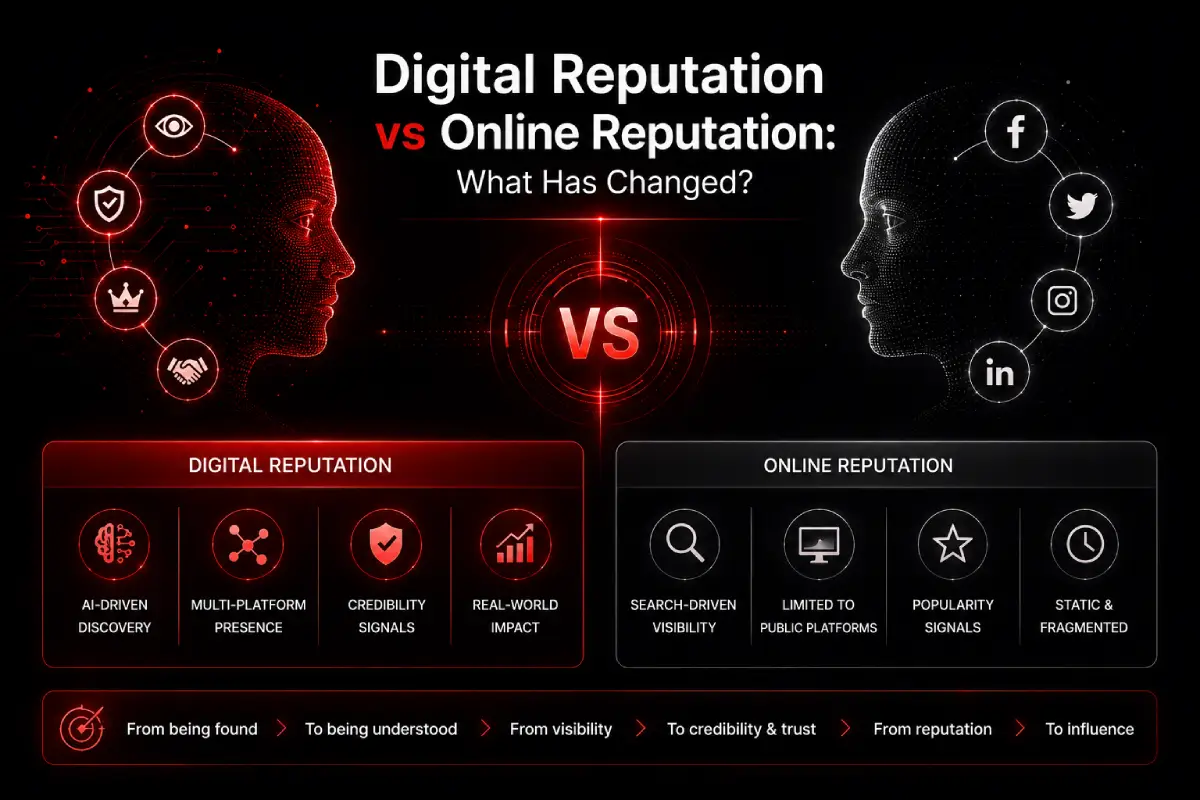
Online reputation has traditionally been associated with:
- search results
- reviews and ratings
- social media mentions
- brand sentiment
- public complaints or praise
- reputation management and response
This model is often reactive. It is concerned with what the internet says about you and whether those signals are positive or negative.
For brands, that may still be useful. But for professionals, leaders, students, institutions and reputation-sensitive ecosystems, the picture is much bigger.
What Digital Reputation includes
Digital Reputation includes online reputation, but it goes further. It asks not only what exists online, but what that digital presence actually means.
Digital Reputation considers:
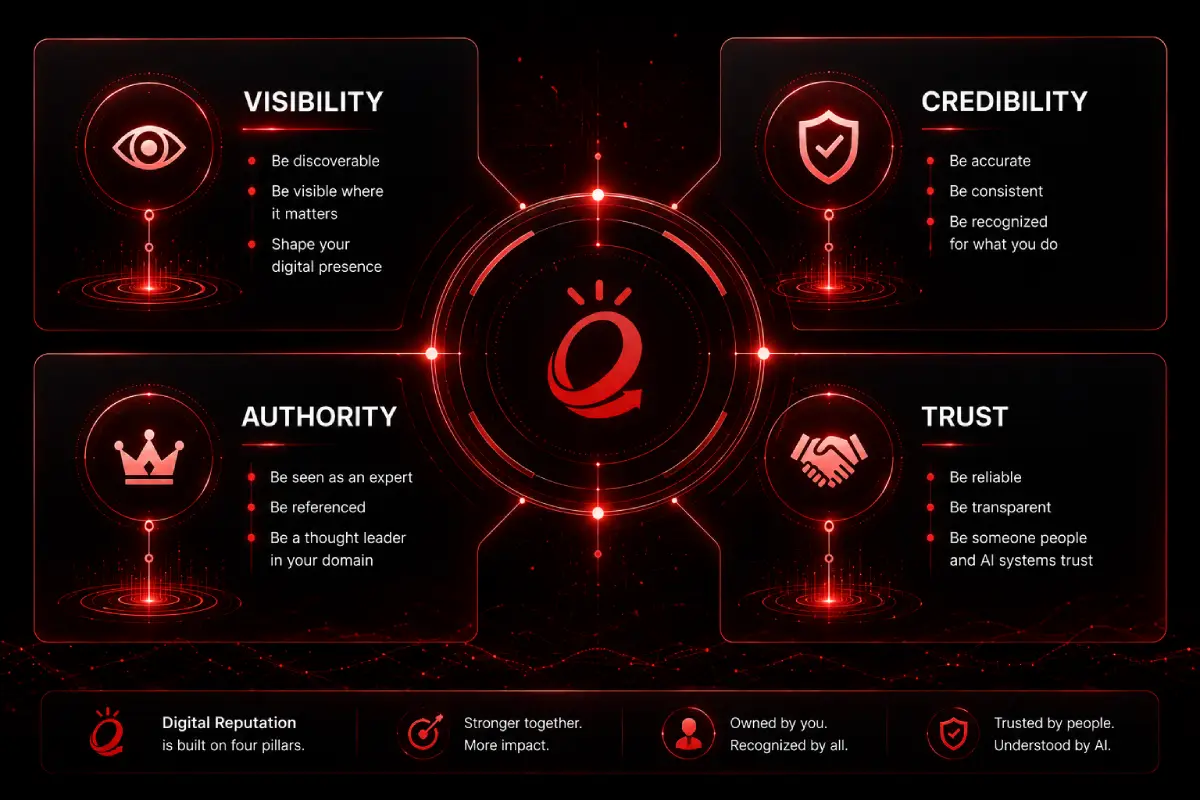
- how visible you are across the digital world
- whether your digital presence creates credibility
- whether your work and expertise create authority
- whether the total digital picture builds trust
- how different touchpoints reinforce or weaken one another
- how discoverability, thought leadership, digital identity and reputation signals work together
This is why Digital Reputation is more strategic than online reputation. It is less about isolated mentions and more about the full architecture of digital presence.
Why the distinction matters now
The AI era has made digital interpretation more layered. People are no longer the only ones scanning your digital footprint. Search systems, AI systems, recommendation systems and platform algorithms all influence what gets surfaced and how it is understood.
That means the difference between Digital Reputation and online reputation is no longer academic. It changes how opportunity is created.
A professional might have no negative search results and still have a weak Digital Reputation because they are invisible, inconsistent or lacking authority signals. A founder may have decent visibility but low trust because their digital presence does not communicate depth or credibility. An institution may have a website and social channels, but still fail to create a strong Digital Reputation because it is not showing evidence of relevance, thought leadership or student visibility.
A simple comparison
Online reputation asks:
What does the internet say about me?
Digital Reputation asks:
What kind of visibility, credibility, authority and trust am I building across the digital world?
That shift changes the conversation from passive monitoring to active strategic presence.
Digital Reputation is a category with broader applications
For students
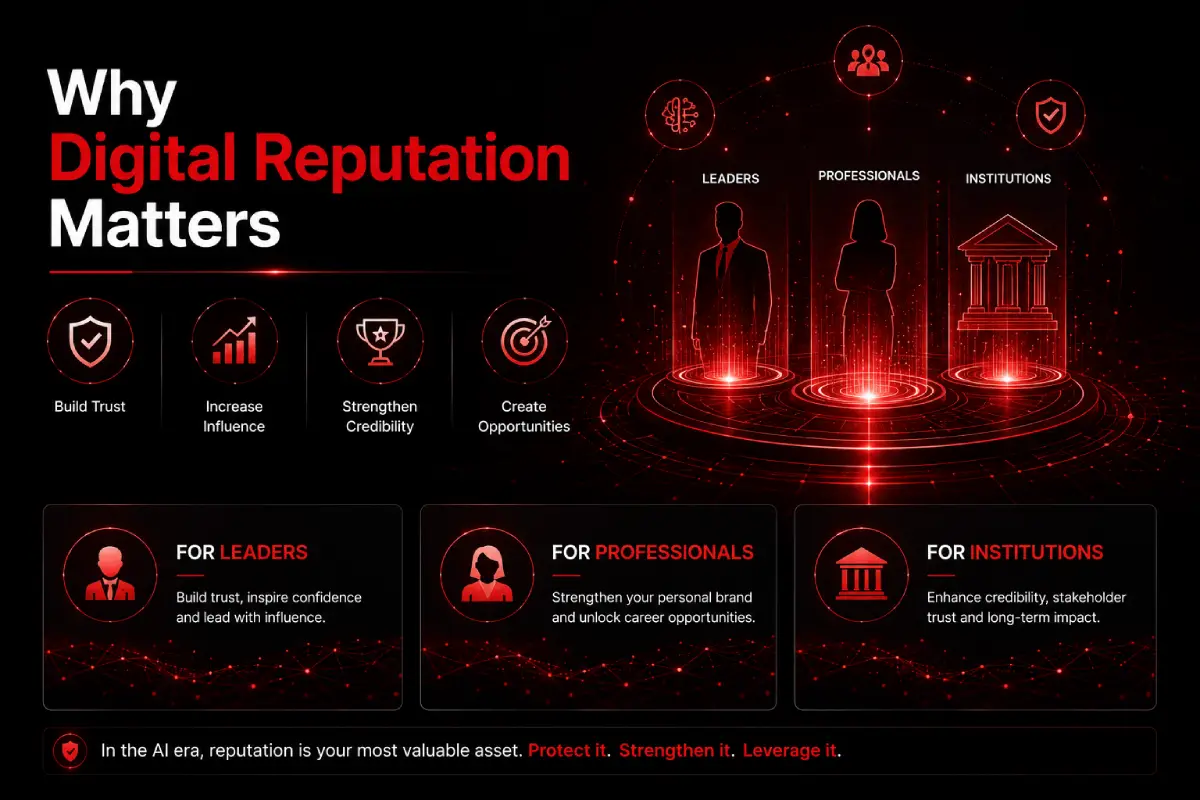
Online reputation might mean “do I look okay on Google or LinkedIn?” Digital Reputation asks whether the student is visible, credible, employable and discoverable in a way that helps them move forward.
For professionals
Online reputation may focus on public image. Digital Reputation focuses on professional presence, thought leadership, discoverability, authority and career relevance.
For leaders
Online reputation may capture perception. Digital Reputation captures how leadership is interpreted, trusted and strengthened through digital visibility and credibility.
For institutions
Online reputation may be limited to public sentiment or brand perception. Digital Reputation expands into student visibility, academic credibility, thought leadership and institutional discoverability.
Why Ennovaterz uses the language of Digital Reputation
Ennovaterz is intentionally building around the term Digital Reputation because it creates a broader and more future-ready category. It allows a more serious conversation about reputation in the AI era — one that goes beyond crisis management, vanity presence or shallow branding.
It also aligns with the way Ennovaterz operates as a Digital Reputation Club and ecosystem through DREAM, DRIVE, interviews, thought leadership, news and knowledge-building.
Final thought
Online reputation is still part of the picture. But Digital Reputation is the larger frame.
Online reputation is about what is visible. Digital Reputation is about what that visibility means.