Artificial intelligence is changing how people find information online. But more importantly, it is changing how people are found.
That shift matters because Digital Reputation is no longer shaped only by traditional search rankings, social media visibility or the websites someone controls directly. In the AI era, public digital presence is increasingly interpreted, summarized and surfaced through AI systems that influence what people see first and how they understand it.
This is one of the reasons Digital Reputation is no longer just online reputation.
Search is no longer only a list of links. For years, digital visibility was closely tied to search engine rankings. If your website ranked well, your LinkedIn profile was complete, and your name showed up in the right places, you had a clearer path to visibility. That model still matters, but it is no longer the whole picture.
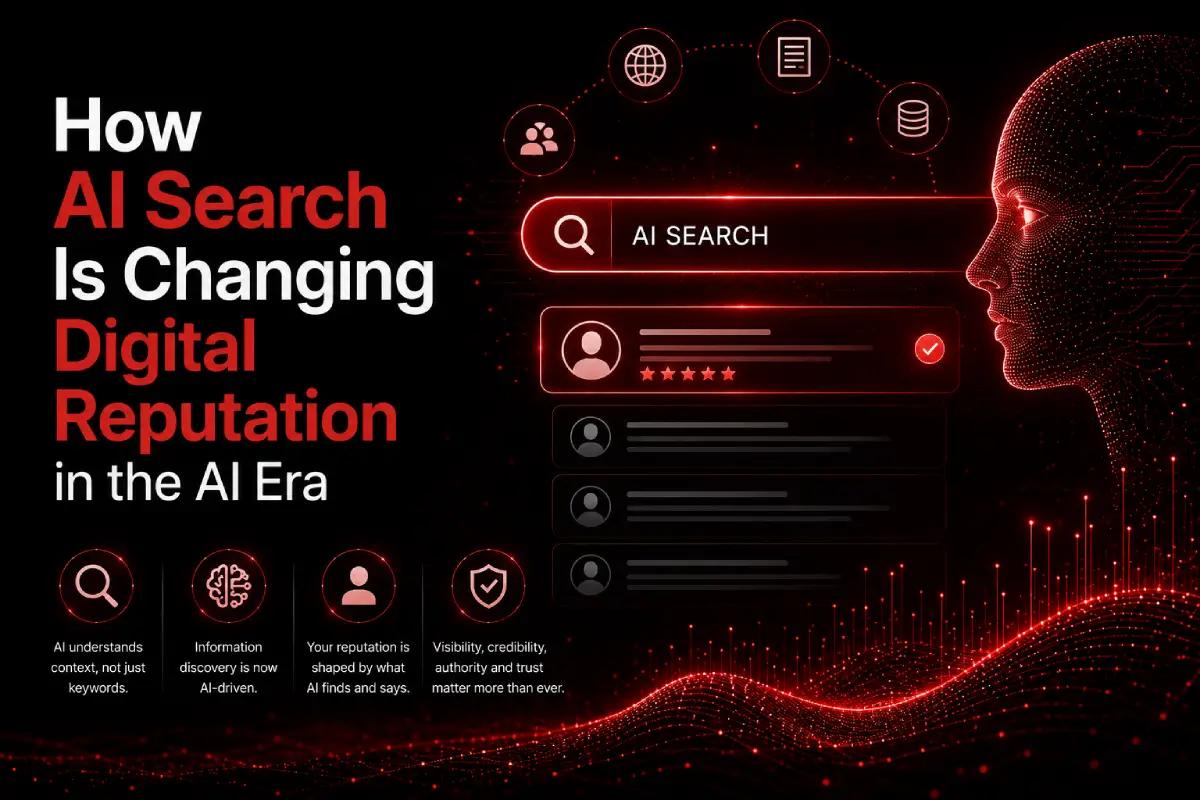
AI-powered search experiences are changing the shape of discovery. Search engines now summarize information, generate answers, and pull context from multiple digital sources. AI assistants and answer engines are doing the same. Instead of simply directing a user to a website, they increasingly try to interpret what matters and present a synthesized answer.
That changes Digital Reputation in a very practical way. It means your digital presence is no longer only being found. It is being interpreted.
Why this matters for Digital Reputation:
- Visibility is changing. It is no longer just about ranking for the right keyword or showing up in the first page of results. It is also about whether your digital signals are strong enough to be surfaced in AI-generated answers, summaries and recommendation layers.
- Credibility is being inferred. When AI systems summarize information, they are implicitly making judgments about what looks reliable, relevant or representative.
- Authority becomes more important. If your work, ideas, interviews, articles and digital footprint do not reinforce one another, authority becomes harder to establish.
- Trust is at stake. AI-generated answers can flatten nuance. If the public digital picture is inconsistent, shallow or confusing, trust can weaken even when real capability exists offline.
One of the biggest changes AI search brings is a move from discoverability alone to interpretability. The old question was: can people find me online? The new question is: when AI systems and people encounter my digital presence, what story do they infer about me?
That is a much more strategic Digital Reputation question. It affects professionals, leaders, students, institutions and brands in different ways, but the underlying challenge is the same: the digital world is now being read by both humans and machines.
At Ennovaterz, Digital Reputation is not treated as a narrow online reputation problem. It is treated as a broader strategic question of how visibility, credibility, authority and trust are built in the digital world. AI search only intensifies that need.
Final thought: AI search is not just changing SEO. It is changing the way reputation is surfaced, interpreted and trusted online. That is why Digital Reputation needs a larger lens than online reputation ever did.